

Ganesh and also known as Ganapati, Vinayaka, and Pillaiyar, is one of the best-known and most widely worshipped deities in the Hindu pantheon.[5] His image is found throughout India.[6] Hindu sects worship him regardless of affiliations.[7] Devotion to Ganesha is widely diffused and extends to Jains, Buddhists, and beyond India.[8] Although he is known by many other attributes, Ganesha's elephant head makes him easy to identify.[9] Ganesha is widely revered as the Remover of Obstacles[10] and more generally as Lord of Beginnings and Lord of Obstacles (Vighnesha, Vighneshvara),[11] patron of arts and sciences, and the deva of intellect and wisdom.[12] He is honoured at the beginning of rituals and ceremonies and invoked as Patron of Letters during writing sessions.[13] Several texts relate mythological anecdotes associated with his birth and exploits and explain his distinct iconography.Ganesha has many other titles and epithets, including Ganapati and Vigneshvara. The Hindu title of respect Shri (Sanskrit: श्री; śrī, also spelled Sri or Shree) is often added before his name. One popular way Ganesha is worshipped is by chanting a Ganesha Sahasranama, a litany of "a thousand names of Ganesha". Each name in the sahasranama conveys a different meaning and symbolises a different aspect of Ganesha. At least two different versions of the Ganesha Sahasranama exist; one version is drawn from the Ganesha Purana, a Hindu scripture venerating Ganesha.[17] The name Ganesha is a Sanskrit compound, joining the words gana (Sanskrit: गण; gaṇa), meaning a group, multitude, or categorical system and isha (Sanskrit: ईश; īśa), meaning lord or master.[18] The word gaņa when associated with Ganesha is often taken to refer to the gaņas, a troop of semi-divine beings that form part of the retinue of Shiva (IAST: Śiva).[19] The term more generally means a category, class, community, association, or corporation.[20] Some commentators interpret the name "Lord of the Gaņas" to mean "Lord of Hosts" or "Lord of created categories", such as the elements.[21] Ganapati (Sanskrit: गणपति; gaṇapati), a synonym for Ganesha, is a compound composed of gaṇa, meaning "group", and pati, meaning "ruler" or "lord".[20] The Amarakosha,[22] an early Sanskrit lexicon, lists eight synonyms of Ganesha : Vinayaka, Vighnarāja (equivalent to Vignesha), Dvaimātura (one who has two mothers),[23] Gaṇādhipa (equivalent to Ganapati and Ganesha), Ekadanta (one who has one tusk), Heramba, Lambodara (one who has a pot belly, or, literally, one who has a hanging belly), and Gajanana (IAST: gajānana) ; having the face of an elephant).[24] Vinayaka (Sanskrit: विनायक; vināyaka) is a common name for Ganesha that appears in the Purāṇas and in Buddhist Tantras.[25] This name is reflected in the naming of the eight famous Ganesha temples in Maharashtra known as the Ashtavinayak (aṣṭavināyaka).[26] The names Vignesha (Sanskrit: विघ्नेश; vighneśa) and Vigneshvara (Sanskrit: विघ्नेश्वर; vighneśvara) (Lord of Obstacles)[11] refers to his primary function in Hindu mythology as the creator and remover of obstacles (vighna).[27] A prominent name for Ganesha in the Tamil language is Pille or Pillaiyar (Little Child).[28] A. K. Narain differentiates these terms by saying that pille means a "child" while pillaiyar means a "noble child". He adds that the words pallu, pella, and pell in the Dravidian family of languages signify "tooth or tusk of an elephant", but more generally "elephant".[29] Anita Raina Thapan notes that the root word pille in the name Pillaiyar might have originally meant "the young of the elephant", because the Pali word pillaka means "a young elephant".[30]Ganesha has been represented with the head of an elephant since the early stages of his appearance in Indian art.[42] Puranic myths provide many explanations for how he got his elephant head.[43] One of his popular forms, Heramba-Ganapati, has five elephant heads, and other less-common variations in the number of heads are known.[44] While some texts say that Ganesha was born with an elephant head, in most stories he acquires the head later.[45] The most recurrent motif in these stories is that Ganesha was born with a human head and body and that Shiva beheaded him when Ganesha came between Shiva and Parvati. Shiva then replaced Ganesha's original head with that of an elephant.[46] Details of the battle and where the replacement head came from vary according to different sources.[47] In another story, when Ganesha was born, his mother, Parvati, showed off her new baby to the other gods. Unfortunately, the god Shani (Saturn), who is said to have the evil eye, looked at him, causing the baby's head to be burned to ashes. The god Vishnu came to the rescue and replaced the missing head with that of an elephant.[48] Another story says that Ganesha was created directly by Shiva's laughter. Because Shiva considered Ganesha too alluring, he gave him the head of an elephant and a protruding belly.[49] Ganesha's earliest name was Ekadanta (One Tusk), referring to his single whole tusk, the other having been broken off.[50] Some of the earliest images of Ganesha show him holding his broken tusk.[51] The importance of this distinctive feature is reflected in the Mudgala Purana, which states that the name of Ganesha's second incarnation is Ekadanta.[52] Ganesha's protruding belly appears as a distinctive attribute in his earliest statuary, which dates to the Gupta period (fourth to sixth centuries).[53] This feature is so important that, according to the Mudgala Purana, two different incarnations of Ganesha use names based on it: Lambodara (Pot Belly, or, literally, Hanging Belly) and Mahodara (Great Belly).[54] Both names are Sanskrit compounds describing his belly (Sanskrit: udara).[55] The Brahmanda Purana says that Ganesha has the name Lambodara because all the universes (i.e., cosmic eggs; IAST: brahmāṇḍas) of the past, present, and future are present in him.[56] The number of Ganesha's arms varies; his best-known forms have between two and sixteen arms.[57] Many depictions of Ganesha feature four arms, which is mentioned in Puranic sources and codified as a standard form in some iconographic texts.[58] His earliest images had two arms.[59] Forms with 14 and 20 arms appeared in central India during the 9th and 10th centuries.[Worship and festivals Celebrations of Ganesh by the Indian and Sri Lankan Tamil community in Paris, France. Ganesha is worshipped on many religious and secular occasions; especially at the beginning of ventures such as buying a vehicle or starting a business.[118] K.N. Somayaji says, "there can hardly be a [Hindu] home [in India] which does not house an idol of Ganapati. [..] Ganapati, being the most popular deity in India, is worshipped by almost all castes and in all parts of the country".[119] Devotees believe that if Ganesha is propitiated, he grants success, prosperity and protection against adversity.[120] Ganesha is a non-sectarian deity, and Hindus of all denominations invoke him at the beginning of prayers, important undertakings, and religious ceremonies.[121] Dancers and musicians, particularly in southern India, begin performances of arts such as the Bharatnatyam dance with a prayer to Ganesha.[122] Mantras such as Om Shri Gaṇeshāya Namah (Om, salutation to the Illustrious Ganesha) are often used. One of the most famous mantras associated with Ganesha is Om Gaṃ Ganapataye Namah (Om, Gaṃ, Salutation to the Lord of Hosts).[123] Devotees offer Ganesha sweets such as modaka and small sweet balls (laddus).[124] He is often shown carrying a bowl of sweets, called a modakapātra.[125] Because of his identification with the color red, he is often worshipped with red sandalwood paste (raktacandana)[126] or red flowers. Dūrvā grass (Cynodon dactylon) and other materials are also used in his worship.[127] Festivals associated with Ganesh are "the Vināyaka caturthī (Ganesh Chaturthi) in the śuklapakṣa (the fourth day of the waxing moon) in the month of bhādrapada (August/September) and the Gaṇeśa jayanti (Gaṇeśa's birthday) celebrated on the cathurthī of the kṛṣṇapakṣa (fourth day of the waning moon) in the month of māgha (January/February)."[128] Ganesh Chaturthi Street festivities in Hyderabad, India during the festival of Ganesh Chaturthi. Main article: Ganesh Chaturthi An annual festival honours Ganesha for ten days, starting on Ganesh Chaturthi, which typically falls in late August or early September.[129] The festival culminates on the day of Ananta Chaturdashi, when images (murtis) of Ganesha are immersed in the most convenient body of water.[130] In 1893, Lokmanya Tilak transformed this annual Ganesha festival from private family celebrations into a grand public event.[131] He did so "to bridge the gap between the Brahmins and the non-Brahmins and find an appropriate context in which to build a new grassroots unity between them" in his nationalistic strivings against the British in Maharashtra.[132] Because of Ganesha's wide appeal as "the god for Everyman", Tilak chose him as a rallying point for Indian protest against British rule.[133] Tilak was the first to install large public images of Ganesha in pavilions, and he established the practice of submerging all the public images on the tenth day.[134] Today, Hindus across India celebrate the Ganapati festival with great fervour, though it is most popular in the state of Maharashtra.[135][136] The festival also assumes huge proportions in Mumbai and in the surrounding belt of Ashtavinayaka temples.TemplesIn Hindu temples, Ganesha is depicted in various ways: as an acolyte or subordinate deity (pãrśva-devatã); as a deity related to the principal deity (parivāra-devatã); or as the principal deity of the temple (pradhāna), treated similarly as the highest gods of the Hindu pantheon.[137] As the god of transitions, he is placed at the doorway of many Hindu temples to keep out the unworthy, which is analogous to his role as Parvati’s doorkeeper.[138] In addition, several shrines are dedicated to Ganesha himself, of which the Ashtavinayak (Sanskrit: अष्टविनायक; aṣṭavināyaka; lit. "eight Ganesha (shrines)") in Maharashtra are particularly well known. Located within a 100-kilometer radius of the city of Pune, each of these eight shrines celebrates a particular form of Ganapati, complete with its own lore and legend; together they "form a mandala, demarking the sacred cosmos of Ganesha".[139] A statue of Ganesha carved in wood There are many other important Ganesha temples at the following locations: Wai in Maharashtra; Ujjain in Madhya Pradesh; Jodhpur, Nagaur and Raipur (Pali) in Rajasthan; Baidyanath in Bihar; Baroda, Dholaka, and Valsad in Gujarat and Dhundiraj Temple in Varanasi, Uttar Pradesh. Prominent Ganesha temples in southern India include the following: : the Jambukeśvara Temple (Ucchi pillaiyar kottai) at Tiruchirapalli; at Rameshvaram and Suchindram; Karpaka Vinayakar Temple in TamilNadu; Hampi, Kasargod, and Idagunji in Karnataka; and Bhadrachalam in Andhra Pradesh.[140][141]
-

GANESH JI


NEW*
- RAJ_RAANI_RAJ_RAANI.mp3*
- MAA_NAAL_GALLAN_KARIYE.mp3*
- MERA_TERE_BIN_LAGDA_NA HIN.mp3*
- PREMWALI_GALI_VICHON.mp3*
- JADON_POUDIYAN_THANDI YAN_HAWAWAN.mp3*
- RAKH_LAAJ_DHAK_PARDE. mp3*
- CHALO_CHALIYE_GULABI_R UTAN_AAIYAN.mp3*
- TERE_DAR_DARVAJJE_MALL ENI.mp3*
- RUSSI_NA_MAA_SHERANW ALI.mp3*
- MAIYA_JI_ASI_NAUKAR_TE RE.mp3*
- MAINU_AAKHO_JI_MAIYA_ DA_FAKEER.mp3*
- SACHCHI_HAI_TU_SACHCH A_DARBAR.mp3*
- MAIYA_JI_TERI_MAYA_HAI .mp3*
- SEER_PE_MUKUT.mp3*
- JAI_JAI_AMBE_JAI_JAGDU MBE.mp3*
- BETA_JO_BULAYE_MAA_KO. mp3*
- AUR_SAHARE_DUNIYA_KE.mp3*
- JAAN_ABHI_BAAKI_HAI.mp3*
- JAAGO_MAA_JAAGO.mp3*
- TERA_DARSHAN_KARNE_AA UN.mp3*
- MAA_MURADEN_POORI_KAR DE.mp3*
- JOT_AAJ_MA_KI.mp3*
- DEKHA_BHAWAN_MAIYA_JI_TERA_LAL.mp3*
- JAI_JAG_JANNI_MA.mp3*
- MA_DA_CHURA-ADD.mp3*
- NACHNA_HAI_DARBAR_ADD_.mp3*
- DAM_DAM_BAJE_DAMROO.mp3*
- BHAKT_IK_SHIV_KA_CHALA.mp3*
- OM_NAMHE_SHIVAYE.mp3*
- MAI_TO_DEVI_DHOKAN.mp3
- PRABHUJI_AAP_BADE_DYALU_HO-ADD.mp3*
- MARO_TALIYAN_TEY.mp3*
- JO_BHI_LE_TERA_NAM.mp3*
- SAB_TO_UCHA_DAR_HAI_MA_DA.mp3*
- AGAT_DHYANU_VANGU_NACHNA.mp3*
- RANG_BARSE.mp3*
- JOTA_DI_HAI_LO.mp3*
- Mohe laagi lagan gungaan .mp3
- Jai ambe gauri mata ji aarti .mp3
- Jai santoshi mata ji aarti .mp3
- Jai gange mata ji aarti .mp3
- Karle tu deedar sherawali mata ka .mp3
- Aap ho janani .mp3
- Mata sherawali aaye hain .mp3
- Dhyanu ki tarah ambe .mp3
- AAj mere ghar mein .mp3
- Matha tek lei .mp3
- Sherawali ke dar pe jo .mp3
- Nachna maai de dwar .mp3
- Main to banke sewadar .mp3
- Suno suno .mp3
- Aapke dar aaye dekho .mp3
- Chitthi aayi hai .mp3
- Maa apni beti .mp3
- Sabko deti hai maiya .mp3
- Darbar khula hai .mp3
- Aaj mere ghar mein .mp3
- Jaga sari raat .mp3
- Maa ke pujari .mp3
- Sharan hum teri aaye hain .mp3
- Poorab mein bhi jai jaikar .mp3
- Jagran ki raat ye bhakton .mp3
- Karle tu deedar sherawali ka .mp3
- Mala maa apke naam ki .mp3
- Ooncha hai darbar .mp3
- Haath jod ke khadi hoon
- Maa raj raj bhog laga .mp3
- Tere sadke tu bhej de bulawa .mp3
- Aapke naam ka karam hai .mp3
- Main balak tu mata sherawaliye- gulshan kumar.mp3
- Ambe charan kamal hain .mp3
- Saeweswari jagdeshwari .mp3
- Mujhe rang de o rangrej .mp3
- Jhoothi dunyia se .mp3
- Khushaal karti. mp3
- Chalo Bhakton .mp3
- Lal lal chunri .mp3
- Maiya ka chola .mp3
- Jai kali ji mata ki Stuti
- Shree Santoshi Mata Stuti.mp3
- Jagdambe Maa.mp3
- Lakhbir Singh Lakkha - Sheesh Mukut Kano Mein Kundal.mp3
- Aarti - Jai Jai Jai Tulsi Mata.mp3
- Chanchal-&-Mohd-Rafi - Jai-Mata-Di.mp3
- Jai_Mata_Di_-_Dhuni_Maa_Ke_Naam_Ki_~_
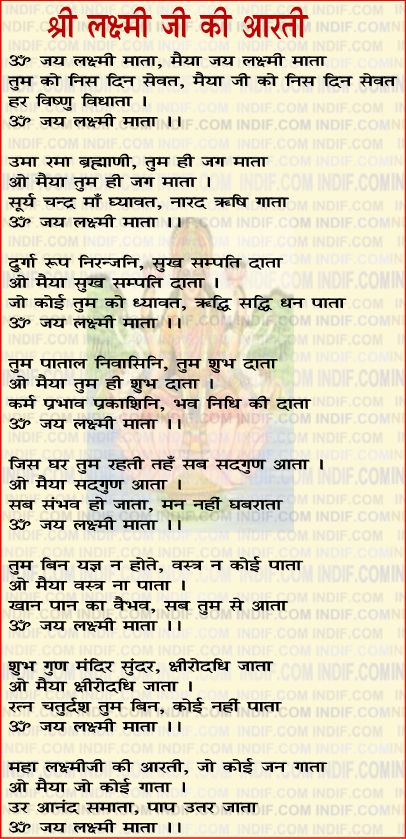
- LAXMI JI AARTI
- MP3 LINK OF AARTI
- SHRI LAXMI MATA BHAJAN

NEW *
- HANSA_NIKAL_GAYE_PINJRE_SE*
- LAAI_HAI_SAI_KA_SANDESA_SHI*
- KISI_DIN_DEKH_LENA__MUKTI_P*
- CHANCHAL_MANN_NIT_OM_JAPAA*
- BAANDH_LE_GATHRI_KARMO KI *
- DO_DIN_KA_RAIN_BASERA*
- AB_LE_LE_HARI_KA_NAAM*
- KYA_LEKAR_TU_AAYA_JAG_MEIN*
- TUJHE_JANAM_MILA_MANAV_CHOL*
- JAISA_TERA_KARAM_VAISA_FAL*
- BINA_HARI_KE_BHAJANWA*
- JAI_MATA_MAA_DEGI_HAMEIN*
- HARI_KA_BHAJAN_KAR_LE*
- DO_DIN_KA_RAIN_BASERA*
- AB_LE_LE_HARI_KA_NAAM*
- BINA_HARI_KE_BHAJANWA*
- _KARMO_KI_SARI_MAYA*
- RAM_NAAM_KE_HERE_MOTI*
- BADE_BHAAG_SE_MAUSHYA_DEH*
- KAYA_KA_PINJARA_DOLE*
- NAAM_JAPAN_KYUN_CHHOD_DIYA*
- JAYEGA_JAB_JAHAN_SE*
- RATLE_HARI_KA_NAAM.*
- TERI_YAARI_MEIN_MURARI_SUKH*
- HAR_BAAT_KO_BHULO_BHALE*
- MERE_BHOLE_BABA_KO*
- _KYA_LEKAR_TU_AAYA_JAG_MEIN*
- JHAKI_SITARAM_KI*
- WEH_SHAKTI_HAMEN_DO*
- SATSANG_HAI_GYAN_SAROVAR*
- JAB_TERI_DOLI_NIKALI_JAYEGI*
- _MAA_JAISI_MAMTA*
- DAYA_KAR_DAAN_BHAKTI_KA*
- MERI_BANDANA_TERE_AAGE*
- MERI_BANDANA_TERE_AAGE*
- KAAM_AAYEGA_PRABHU_KA_BHAJA*
- CHHODKAR_SANSAR_JAB_TU_JAYE*
- KABHI_PYASE_KO_PAANI*
- NAAM_PRABHU_KA_LIYA_KARO*
- NAHIN_CHAHIYE_DIL_DUKHANA_K*
- BHALA_KISI_KA_KAR_NA_SAKO*
- Tora maan darpan kehlaye .mp3
- Ae malik aapke bande haam .mp3
- Yashomati maiya sae bole .mp3
- Ishwar satya hai satyam shivam sundram .mp3
- Jag mein sunder hain doo naam .mp3
- Aaphi ho mata main .mp3
- Maan aapka mandir bhakti .mp3
- Aap pyar ka sagar haoo .mp3
- Humko man ki shakti .mp3
- Hari bol- kirtan .mp3
- Tera ramji karenge beda paar .mp3
- Apke dar ko chale (gungaan) .mp3
- JAI JAI RAM DO AKSHAR KA PYARA NAAM .mp3
- Prabhu humpe kripa karna .mp3
- Is tan mein rama karna gungaan .mp3
- Hae dukhbhanjan maruti nandan ji shri hanuman ji .mp3
- Koi samje bhakti gungaan .mp3
- Madhurashtrakam_vishnu stuti .mp3
- Shri vishnu chalisa_ vishnu stuti .mp3
- Sankatmochan hanuman ashtak .mp3
- Mangal moorti maruti nandan .mp3
- Hee bajrangbali hanuman chalisa .mp3
- Aarti shree ramayan ji ki .mp3
- Mere man ke andh .mp3
- Dohe .mp3
- Shyam naam ras barse .mp3
- Patit pawan thiro .mp3
- Jeevan ki prabhu saanjh bhayee .mp3
- Tum peer harro braj ke swami .mp3
- Krishna murariji .mp3
- Banke bihari .mp3
- Laaj rakho girdhari .mp3
- Prabuji tum chandan ham pani .mp3
- Hare krishna mahamantra .mp3
- Rasiya main to saran tihar .mp3
- Baat nihar .mp3
- Var de var de .mp3
- Bhakti vandan(Krishan dun) .mp3
- Tum karuna ke sagar ho .mp3
- Har har har mahadev . mp3
- om
- Bolo ram jai jai ram .mp3
- Beet gaye din .mp3
- Akhiyaan hari darsan pyasi .mp3
- Radhe krishan dhun .mp3
- Saanwariya man bhaya re .mp3
- Meri raksha karobajrangbali mp3
- Apke karoona se sabki hai wipda tali mp3
- Ram ram ratt bhaiyaa mp3
- Ram ka naam lo mp3
- Govinda gopala mp3
- Nandlala krishna murari mp3
- Tere naam ki dhun laagi mp3
- Teri pooja mein man leen rahe mp3
- Mayiaa yashoda mp3
- Shri ramchandra kripalu mp3
- Paawan prem ram charan mp3
- Shree jai ram jai ram mp3
- Janam safal hoga bande mp3
- Ram ji mp3
- Ram japo ji.mp3
- Ram Bhajans-01 Paawan Prem Ram Charan Kamal.mp3
- Ram Bhajans-04 Jhoolat Ram Paalne Sohe.mp3
- Ram Bhajans-05 Bhajman Ram Charan Sukhdai.mp3
- Ram Bhajans-06 Thumak Chalat Ramchandra.mp3
- Ram Bhajans-08Shree Ramchandra Kripalu Bhajman.mp3
- Ram Bhajans-10 Shree Ram Jai Ram Jai Jai Ram.mp3
- Kabhi Ram Banke Kabhi Shyam.mp3
- SHRI RAM JI AARTI
- DOWNLOAD MP3 OF AARTI
- DOWNLOAD MP3 OF SHRI RAM CHALISA

-
Didn't got what you were finding search here for all results


- Govinda gopala mp3
- Nandlala krishna murari mp3
- Tere naam ki dhun laagi mp3
- Teri pooja mein man leen rahe mp3
- krishna bhajans 2 mp3
- Krishna bhajans 1 mp3
- Brahma Stuti mp3
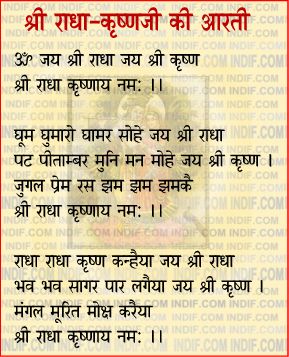
- Radhe Krishna Aarti mp3
- Lord Krishna mp3
- Radhe radhe radhe govinda.mp3
- Kripa karo hum par.mp3
- Kabhi Ram Banke Kabhi Shyam Banke.mp3
- DOWNLOAD MP3 BHAJAN OF SHRI KRISHNA JI
- DOWNLOAD MP3 OF AARTI
- SHRI KRISHNA JI AARTI







Post a Comment