

Rama (IAST: rāma, Devanāgarī: राम, Khmer: ព្រះរាម, Thai: พระราม, Lao: ພຣະຣາມ, Burmese: Yama, Tagalog: Rajah Bantugan) or Ramachandra [1]is the seventh avatar of Vishnu in Hinduism,[2]and a legendary king of Ayodhya in ancient India. A significant section of Hindus do not doubt his historicity, and consider him an actual king who ruled over a large part of what is now India from his capital Ayodhya. Rama is one of the many popular figures and deities in Hinduism, specifically Vaishnavism and Vaishnava religious scriptures in South and Southeast Asia.[3] Most of the details of Rama's life come from the Ramayana, one of the two great epics of India.[4] Born as the eldest son of Kaushalya and Dasharatha, king of Ayodhya, Rama is referred to within Hinduism as Maryada Purushottama,[5] literally the Perfect Man or Lord of Restrictions.[6] Rama is the husband of Sita, who Hindus consider to be an Avatar of Lakshmi and the embodiment of perfect womanhood.[5][7] Rama's life and journey is one of perfect adherence to dharma despite harsh tests of life and time. He is pictured as the ideal man and the perfect human. For the sake of his father's honour, Rama abandons his claim to Kosaulya's throne to serve an exile of fourteen years in the forest.[8] His wife, Sita and brother, Lakshmana being unable to live without Rama decide to join him, and all three spend the fourteen years in exile together. This leads to the kidnapping of Sita by Ravana, the Rakshasa (Asura) monarch of Lanka. After a long and arduous search that tests his personal strength and virtue, Rama fights a colossal war against Ravana's armies. In a war of powerful and magical beings, greatly destructive weaponry and battles, Rama slays Ravana in battle and liberates his wife. Having completed his exile, Rama returns to be crowned King in Ayodhya (the capital of his Kingdom) and eventually becomes Emperor of the World,[8] after which he reigns for eleven thousand years – an era of perfect happiness, peace, prosperity and justice known as Rama Rajya. Rama's courage in searching for Sita and fighting a terrible war to rescue his wife and their honour is complemented by Sita's absolute devotion to her husband's love, and perfect chastity despite being Ravana's captive. Rama's younger brothers, namely Lakshmana, Shatrughna and Bharata strongly complement his piety, virtue and strength,[8] and they are believed by many to belong to the Maryada Purushottama and the Seventh Avatara, mainly embodied by Rama. Rama's piety and virtue attract powerful and devoted allies such as Hanuman and the Vanaras of Kishkindha, with whose help he rescues Sita.[8] The legend of Rama is deeply influential and popular in the societies of the Indian subcontinent and across South East Asia. Rama is revered for his unending compassion,[9] courage and devotion to religious values and duty.The primary source of the life and journey of Rama is the epic Ramayana as composed by the Rishi Valmiki. The Vishnu Purana also recounts Rama as Vishnu's seventh avatara, and in the Bhagavata Purana, ninth skandha, adhyayas 10 & 11, the story of the Ramayana is again recounted in brief up to an including the slaying of Ravana and Prince Rama's return to Ayodhya. Additionally, the tales of Rama are reverently spoken of in the epic Mahabharata. The epic had many versions across India's regions. However, other scriptures in Sanskrit reflect the life of Ramayana. The followers of Sri Madhvacharya believe that an older version of the Ramayana, the mula-Ramayana, previously existed but is no longer extant. They consider it to be more authoritative than the version by Valmiki. Another important shortened version of the epic in Sanskrit is the Aadhyaatma Ramayana. The seventh century CE Sanskrit "Bhatti's Poem" Bhaṭṭikāvya of Bhaṭṭi, From South India, is a retelling of the epic that simultaneously illustrates the grammatical examples for Pāṇini's Aṣṭādhyāyī as well as the major figures of speech and the Prakrit language[10].For further examples, vernacular versions of the Ramayana which include the life, deeds and divine philosophies of Rama are elaborated in the epic poem Kambaramayanam by the 12th century poet, Kamban in Tamil and Ramacharitamanasa, a Hindi version of the Ramayana by the 16th century Saint Tulsidas. Other vernacular versions also exist in most major Indian languages. Contemporary versions of the Ramayana include Sri Ramayana Darshanam by Kuvempu in Kannada and Ramayana Kalpavrikshamu by Viswanatha Satyanarayana in Telugu, both of which have been awarded the Jnanpith Award. The epic has transformed across the diverse regions of India, which boast their own unique languages and cultural traditions.[11] The essential tale of Rama has also spread across South East Asia, and evolved into unique renditions of the epic – incorporating local history, folktales, religious values as well as unique features from the languages and literary discourse. The Kakawin Ramayana of Java, Indonesia, the Ramakavaca of Bali, Hikayat Seri Rama of Malaysia, Maradia Lawana of the Philippines, Ramakien of Thailand (which calls him Phra Ram) are great works with many unique characteristics and differences in accounts and portrayals of the legend of Rama. The legends of Rama are witnessed in elaborate illustration at the Wat Phra Kaew temple in Bangkok. The national epic of Myanmar, Yama Zatdaw is essentially the Burmese Ramayana, where Rama is named Yama. In the Reamker of Cambodia, Rama is known as Preah Ream. In the Pra Lak Pra Lam of Laos, Buddha is regarded as an incarnation of Rama.Rama and Sita are the protagonists in one of the most famous love stories of all time. Described as being deeply in love, Sita and Rama are theologically understood as avatars of Lakshmi and Vishnu respectively. When Rama is banished from the kingdom, he attempts to convince Sita not to join him in a potentially dangerous and certainly arduous existence in the jungle, but Sita rejects this. When Rama orders her in his capacity as husband, Sita rejects it, asserting that it was an essential duty of a wife to be at her husband's side come good or ill.[20] Rama in turn is assiduously protective and caring for Sita throughout the exile. When Sita is kidnapped by Ravana, both Sita and Rama undergo great personal hardships during their separation. Sita protects her chastity assiduously, and survives over a year in captivity on the strength of her love and attention to religious values and duty. She is completely unfettered in her resolve despite Ravana's courting, cajoling and threats. Meanwhile Rama, not knowing who had kidnapped Sita or where was she taken, often succumbs to despair and tears, denouncing himself for failing to defend her and agonizing over her safety and pain. Sita knows that it is in Rama's destiny to fight to rescue her (she refuses to be rescued thus by Hanuman, who discovers her), but is deeply anxious for his safety and fearful of Ravana's power.Bharata and Lakshmana Absent when Rama is exiled, upon his return Bharata is appalled to learn of the events. And even though Kaikeyi had done all this for his benefit, Bharata is angered at the suggestion that he should take Ayodhya's throne. Denouncing his mother, Bharata proclaims to the city that he would go to the forest to fetch Rama back, and would serve out his term of exile himself. Although initially resentful and suspicious, the people of Ayodhya hail Bharata's selfless nature and courageous act. Despite his fervent pleas to return, Rama asserts that he must stay in the forest to keep his father's word. He orders Bharata to perform his duty as king of Ayodhya, especially important after Dasaratha's death, and orders Shatrughna to support and serve him. Returning saddened to the city, Bharata refuses to wear the crown or sit on the throne. Instead, he places the slippers of Rama that he had taken back with him on the throne, and rules Ayodhya assiduously keeping Rama's beliefs and values in mind. When Rama finally returns, Bharata runs personally to welcome him back. Bharata is hailed for his devotion to his elder brother and dharma, distinguished from Lakshmana as he is left on his own for fourteen years. But he unfailingly denies self-interest throughout this time, ruling the kingdom only in Rama's image.[25] Vasishtha proclaims that no one had better learnt dharma than Bharata,[26] and for this piety he forms an essential part of the conception of perfect manhood, of the Seventh Avatara of Vishnu. Shatrughna's role to Bharata is akin to that of Lakshmana to Rama. Believed to be one-quarter of Vishnu incarnated, or as the incarnation of his eternal companion, Ananta Sesha, Lakshmana is always at Rama's side.[27] Although unconstrained by Dasaratha's promise to Kaikeyi, Lakshmana resists Rama's arguments and accompanies him and Sita into the forest. During the years of exile, Lakshmana constantly serves Rama and Sita – building huts, standing guard and finding new routes. When Sita is kidnapped, Rama blazes with his divine power and in his immense rage, expresses the desire to destroy all creation. Lakshmana prays and pleads for Rama to calm himself, and despite the shock of the moment and the promise of travails to come, begin an arduous but systematic search for Sita. During times when the search is proving fruitless and Rama fears for Sita, and expresses despair in his grief and loneliness, Lakshmana encourages him, providing hope and solace. When Rama in his despair fears that Sugriva has forgotten his promise to help him trace Sita, Lakshmana goes to Kishkindha to remind the complacent monarch of his promise to help. But Lakshmana kicks down the city gate and threatens to destroy Sugriva and the monkey kingdom with his own divine power. Lakshmana is unable to tolerate Sugriva breaking his vow to Rama while enjoying material and sensual pleasures while Rama suffers alone. It is only through the diplomatic intervention of Queen Tara, Sugriva's wife, that Lakshmana is pacified. Tara then scolds and galvanises Sugriva into honoring his promise to Rama. Sugriva and Rama are then reconciled with the help of Lakshmana and Tara. And finally Sugriva appoints Hanuman to find the location of Sita and lead the monkey army into battle against the demonic forces of Ravana.[28] Lakshmana is uniquely responsible for slaying Indrajit, the invincible son of Ravana who had humiliated Indra and the Devas, and outwitted the brothers and the Vanaras on several occasions. Rishi Agastya later points out that this victory was the turning point of the conflict. Rama is often overcome with emotion and deep affection for Lakshmana, acknowledging how important and crucial Lakshmana's love and support was for him. He also trusts Lakshmana to carry out difficult orders – Lakshmana was asked to take Sita to the ashrama of Valmiki, where she was to spend her exile. Lakshmana's deep love for Rama, his unconditional service and sacrifice, as well as qualities of practical judgment and clear-headedness make him Rama's superior in certain situations and perspectives. Lakshmana symbolizes a man's duty to his family, brothers aWhen Rama is sixteen years old, he and his brother Lakshmana are taken by Vishwamitra to the forests, with the purpose of killing rakshasas who are wrecking the tapasya and sacrifices of brahmins. Rama and Lakshmana are taught the advanced military arts and given the knowledge of all celestial weapons by Vishwamitra. Rama proceeds to slay Tadaka, a cursed demoness. When asked to slay the yaksha demon, Rama demurs, considering it sinful to kill a woman. But Vishwamitra explains that evil has no gender. The killing of Tadaka liberates the yaksha soul who was cursed for a sin, and had to adopt a rakshasi's body. It restores the purity of the sacrifices of the brahmins who live nearby, and protects the animals who live in the forest, and travelers. The main purpose of Vishwamitra's exursion is to conduct his yagna without interruption from two evil demons, Maricha and Subahu. Rama and Lakshmana guard the sacrifice, and when the two demons appear, Rama shoots an arrow that carries Maricha across the lands and into the ocean, but does not kill him. Rama and his brother then proceed to kill Subahu and accompanying demons. Rama explains to Lakshmana that leaving Maricha alive was an act of compassion, but the others did not heed the point and chose to attack.[32] During the forest exile, sages plead for protection and help against evil rakshasas who spoil their sacrifices and religious activities and terrorize them. Many rakshasas had even killed and eaten sages and innocent people. At Rama asserts his dedication to dharma when he undertakes to offer Ravana a final chance to make peace, despite his heinous actions and patronage of evil, by immediately returning Sita and apologizing to both Rama and Sita, but Ravana refuses. In the war, Rama slays the most powerful rakshasa commanders, including Prahasta, Atikaya and with Ravana's brother, Kumbhakarna along with hundreds of thousands of rakshasa soldiers. He outfights Ravana in their first battle, destroying his chariot and weapons, and severely injuring him, but due to this, he allows him to live and return to fight another day. But as a human being, Rama also proves vulnerable on occasion to his enemies. He is put to a deep sleep with Lakshmana by the nagapash of Indrajit, but they recover when Hanuman obtains the magical medicine according to Vibheesana's advice. In the grand finale of the battle, Rama engages Ravana, who through the devastation of losing his sons, his brothers and friends and millions of his warriors, arouses his awesome and magical powers and makes full use of the boons of Siva and Brahma, and the magical knowledge of warfare possessed by the greatest of rakshasas. Rama and Ravana compete fiercely, inflicting severe injuries on one another with the most powerful weapons that could destroy the universe. After a long and arduous battle, Rama successfully decapitates Ravana's central head, but an ugly head, symbolic of all of Ravana's evil powers arises in its place. After another long battle, Rama decapitates it, only to find another growing in its place. This cycle continues, and as darkness approaches, Ravana's magical powers increase in force. Vibheeshana, seeing this then tells Rama something vital. Ravana had obtained amrita, the nectar of immortality, from the gods. Though he could not consume it, he nevertheless stored a vessel of it in his stomach. This amrit was causing his heads to regenerate as soon as they were cut off. Upon the advice of Agastya, Rama worships Lord Aditya, the Sun, with the famous Aditya Hridayam prayer and then invokes the most powerful weapon, the Brahmastra. Rama fires the great arrow that enters Ravana's chest/stomach and destroys the store of amrit, killing him finally.[34] Following Ravana's death, Rama is immediately compassionate. After investing Vibheeshana as the next king of Lanka, he asks the new king and the surviving rakshasas to properly cremate their dead king, who he acknowledges was a great being worthy of respect and admiration, despite his patronage of evil.[35]Janasthana, Rama uses his exceptional prowess to single-handedly kill over fourteen thousand demon hordes led by the powerful Khara, who is a cousin of Ravana.nd friends, and forms an essential part of the conception of ideal manhood, that Rama primarily embodies
-

GANESH JI


NEW*
- RAJ_RAANI_RAJ_RAANI.mp3*
- MAA_NAAL_GALLAN_KARIYE.mp3*
- MERA_TERE_BIN_LAGDA_NA HIN.mp3*
- PREMWALI_GALI_VICHON.mp3*
- JADON_POUDIYAN_THANDI YAN_HAWAWAN.mp3*
- RAKH_LAAJ_DHAK_PARDE. mp3*
- CHALO_CHALIYE_GULABI_R UTAN_AAIYAN.mp3*
- TERE_DAR_DARVAJJE_MALL ENI.mp3*
- RUSSI_NA_MAA_SHERANW ALI.mp3*
- MAIYA_JI_ASI_NAUKAR_TE RE.mp3*
- MAINU_AAKHO_JI_MAIYA_ DA_FAKEER.mp3*
- SACHCHI_HAI_TU_SACHCH A_DARBAR.mp3*
- MAIYA_JI_TERI_MAYA_HAI .mp3*
- SEER_PE_MUKUT.mp3*
- JAI_JAI_AMBE_JAI_JAGDU MBE.mp3*
- BETA_JO_BULAYE_MAA_KO. mp3*
- AUR_SAHARE_DUNIYA_KE.mp3*
- JAAN_ABHI_BAAKI_HAI.mp3*
- JAAGO_MAA_JAAGO.mp3*
- TERA_DARSHAN_KARNE_AA UN.mp3*
- MAA_MURADEN_POORI_KAR DE.mp3*
- JOT_AAJ_MA_KI.mp3*
- DEKHA_BHAWAN_MAIYA_JI_TERA_LAL.mp3*
- JAI_JAG_JANNI_MA.mp3*
- MA_DA_CHURA-ADD.mp3*
- NACHNA_HAI_DARBAR_ADD_.mp3*
- DAM_DAM_BAJE_DAMROO.mp3*
- BHAKT_IK_SHIV_KA_CHALA.mp3*
- OM_NAMHE_SHIVAYE.mp3*
- MAI_TO_DEVI_DHOKAN.mp3
- PRABHUJI_AAP_BADE_DYALU_HO-ADD.mp3*
- MARO_TALIYAN_TEY.mp3*
- JO_BHI_LE_TERA_NAM.mp3*
- SAB_TO_UCHA_DAR_HAI_MA_DA.mp3*
- AGAT_DHYANU_VANGU_NACHNA.mp3*
- RANG_BARSE.mp3*
- JOTA_DI_HAI_LO.mp3*
- Mohe laagi lagan gungaan .mp3
- Jai ambe gauri mata ji aarti .mp3
- Jai santoshi mata ji aarti .mp3
- Jai gange mata ji aarti .mp3
- Karle tu deedar sherawali mata ka .mp3
- Aap ho janani .mp3
- Mata sherawali aaye hain .mp3
- Dhyanu ki tarah ambe .mp3
- AAj mere ghar mein .mp3
- Matha tek lei .mp3
- Sherawali ke dar pe jo .mp3
- Nachna maai de dwar .mp3
- Main to banke sewadar .mp3
- Suno suno .mp3
- Aapke dar aaye dekho .mp3
- Chitthi aayi hai .mp3
- Maa apni beti .mp3
- Sabko deti hai maiya .mp3
- Darbar khula hai .mp3
- Aaj mere ghar mein .mp3
- Jaga sari raat .mp3
- Maa ke pujari .mp3
- Sharan hum teri aaye hain .mp3
- Poorab mein bhi jai jaikar .mp3
- Jagran ki raat ye bhakton .mp3
- Karle tu deedar sherawali ka .mp3
- Mala maa apke naam ki .mp3
- Ooncha hai darbar .mp3
- Haath jod ke khadi hoon
- Maa raj raj bhog laga .mp3
- Tere sadke tu bhej de bulawa .mp3
- Aapke naam ka karam hai .mp3
- Main balak tu mata sherawaliye- gulshan kumar.mp3
- Ambe charan kamal hain .mp3
- Saeweswari jagdeshwari .mp3
- Mujhe rang de o rangrej .mp3
- Jhoothi dunyia se .mp3
- Khushaal karti. mp3
- Chalo Bhakton .mp3
- Lal lal chunri .mp3
- Maiya ka chola .mp3
- Jai kali ji mata ki Stuti
- Shree Santoshi Mata Stuti.mp3
- Jagdambe Maa.mp3
- Lakhbir Singh Lakkha - Sheesh Mukut Kano Mein Kundal.mp3
- Aarti - Jai Jai Jai Tulsi Mata.mp3
- Chanchal-&-Mohd-Rafi - Jai-Mata-Di.mp3
- Jai_Mata_Di_-_Dhuni_Maa_Ke_Naam_Ki_~_
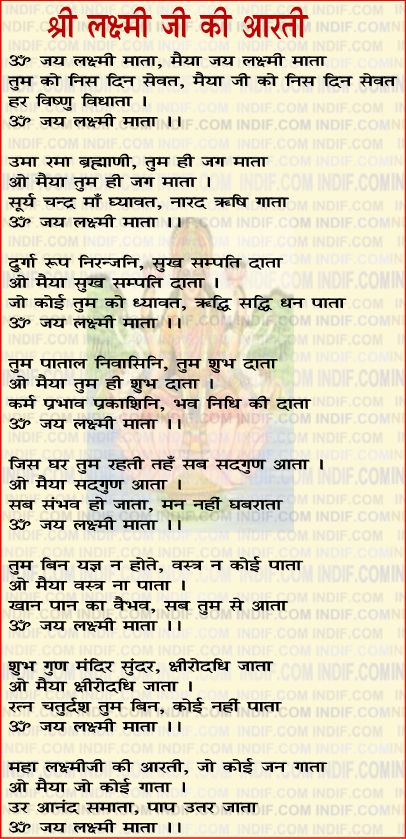
- LAXMI JI AARTI
- MP3 LINK OF AARTI
- SHRI LAXMI MATA BHAJAN

NEW *
- HANSA_NIKAL_GAYE_PINJRE_SE*
- LAAI_HAI_SAI_KA_SANDESA_SHI*
- KISI_DIN_DEKH_LENA__MUKTI_P*
- CHANCHAL_MANN_NIT_OM_JAPAA*
- BAANDH_LE_GATHRI_KARMO KI *
- DO_DIN_KA_RAIN_BASERA*
- AB_LE_LE_HARI_KA_NAAM*
- KYA_LEKAR_TU_AAYA_JAG_MEIN*
- TUJHE_JANAM_MILA_MANAV_CHOL*
- JAISA_TERA_KARAM_VAISA_FAL*
- BINA_HARI_KE_BHAJANWA*
- JAI_MATA_MAA_DEGI_HAMEIN*
- HARI_KA_BHAJAN_KAR_LE*
- DO_DIN_KA_RAIN_BASERA*
- AB_LE_LE_HARI_KA_NAAM*
- BINA_HARI_KE_BHAJANWA*
- _KARMO_KI_SARI_MAYA*
- RAM_NAAM_KE_HERE_MOTI*
- BADE_BHAAG_SE_MAUSHYA_DEH*
- KAYA_KA_PINJARA_DOLE*
- NAAM_JAPAN_KYUN_CHHOD_DIYA*
- JAYEGA_JAB_JAHAN_SE*
- RATLE_HARI_KA_NAAM.*
- TERI_YAARI_MEIN_MURARI_SUKH*
- HAR_BAAT_KO_BHULO_BHALE*
- MERE_BHOLE_BABA_KO*
- _KYA_LEKAR_TU_AAYA_JAG_MEIN*
- JHAKI_SITARAM_KI*
- WEH_SHAKTI_HAMEN_DO*
- SATSANG_HAI_GYAN_SAROVAR*
- JAB_TERI_DOLI_NIKALI_JAYEGI*
- _MAA_JAISI_MAMTA*
- DAYA_KAR_DAAN_BHAKTI_KA*
- MERI_BANDANA_TERE_AAGE*
- MERI_BANDANA_TERE_AAGE*
- KAAM_AAYEGA_PRABHU_KA_BHAJA*
- CHHODKAR_SANSAR_JAB_TU_JAYE*
- KABHI_PYASE_KO_PAANI*
- NAAM_PRABHU_KA_LIYA_KARO*
- NAHIN_CHAHIYE_DIL_DUKHANA_K*
- BHALA_KISI_KA_KAR_NA_SAKO*
- Tora maan darpan kehlaye .mp3
- Ae malik aapke bande haam .mp3
- Yashomati maiya sae bole .mp3
- Ishwar satya hai satyam shivam sundram .mp3
- Jag mein sunder hain doo naam .mp3
- Aaphi ho mata main .mp3
- Maan aapka mandir bhakti .mp3
- Aap pyar ka sagar haoo .mp3
- Humko man ki shakti .mp3
- Hari bol- kirtan .mp3
- Tera ramji karenge beda paar .mp3
- Apke dar ko chale (gungaan) .mp3
- JAI JAI RAM DO AKSHAR KA PYARA NAAM .mp3
- Prabhu humpe kripa karna .mp3
- Is tan mein rama karna gungaan .mp3
- Hae dukhbhanjan maruti nandan ji shri hanuman ji .mp3
- Koi samje bhakti gungaan .mp3
- Madhurashtrakam_vishnu stuti .mp3
- Shri vishnu chalisa_ vishnu stuti .mp3
- Sankatmochan hanuman ashtak .mp3
- Mangal moorti maruti nandan .mp3
- Hee bajrangbali hanuman chalisa .mp3
- Aarti shree ramayan ji ki .mp3
- Mere man ke andh .mp3
- Dohe .mp3
- Shyam naam ras barse .mp3
- Patit pawan thiro .mp3
- Jeevan ki prabhu saanjh bhayee .mp3
- Tum peer harro braj ke swami .mp3
- Krishna murariji .mp3
- Banke bihari .mp3
- Laaj rakho girdhari .mp3
- Prabuji tum chandan ham pani .mp3
- Hare krishna mahamantra .mp3
- Rasiya main to saran tihar .mp3
- Baat nihar .mp3
- Var de var de .mp3
- Bhakti vandan(Krishan dun) .mp3
- Tum karuna ke sagar ho .mp3
- Har har har mahadev . mp3
- om
- Bolo ram jai jai ram .mp3
- Beet gaye din .mp3
- Akhiyaan hari darsan pyasi .mp3
- Radhe krishan dhun .mp3
- Saanwariya man bhaya re .mp3
- Meri raksha karobajrangbali mp3
- Apke karoona se sabki hai wipda tali mp3
- Ram ram ratt bhaiyaa mp3
- Ram ka naam lo mp3
- Govinda gopala mp3
- Nandlala krishna murari mp3
- Tere naam ki dhun laagi mp3
- Teri pooja mein man leen rahe mp3
- Mayiaa yashoda mp3
- Shri ramchandra kripalu mp3
- Paawan prem ram charan mp3
- Shree jai ram jai ram mp3
- Janam safal hoga bande mp3
- Ram ji mp3
- Ram japo ji.mp3
- Ram Bhajans-01 Paawan Prem Ram Charan Kamal.mp3
- Ram Bhajans-04 Jhoolat Ram Paalne Sohe.mp3
- Ram Bhajans-05 Bhajman Ram Charan Sukhdai.mp3
- Ram Bhajans-06 Thumak Chalat Ramchandra.mp3
- Ram Bhajans-08Shree Ramchandra Kripalu Bhajman.mp3
- Ram Bhajans-10 Shree Ram Jai Ram Jai Jai Ram.mp3
- Kabhi Ram Banke Kabhi Shyam.mp3
- SHRI RAM JI AARTI
- DOWNLOAD MP3 OF AARTI
- DOWNLOAD MP3 OF SHRI RAM CHALISA

-
Didn't got what you were finding search here for all results


- Govinda gopala mp3
- Nandlala krishna murari mp3
- Tere naam ki dhun laagi mp3
- Teri pooja mein man leen rahe mp3
- krishna bhajans 2 mp3
- Krishna bhajans 1 mp3
- Brahma Stuti mp3
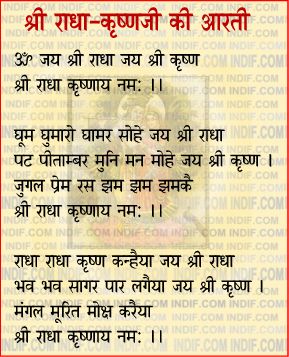
- Radhe Krishna Aarti mp3
- Lord Krishna mp3
- Radhe radhe radhe govinda.mp3
- Kripa karo hum par.mp3
- Kabhi Ram Banke Kabhi Shyam Banke.mp3
- DOWNLOAD MP3 BHAJAN OF SHRI KRISHNA JI
- DOWNLOAD MP3 OF AARTI
- SHRI KRISHNA JI AARTI







Post a Comment